Curated by Leo Lencsés
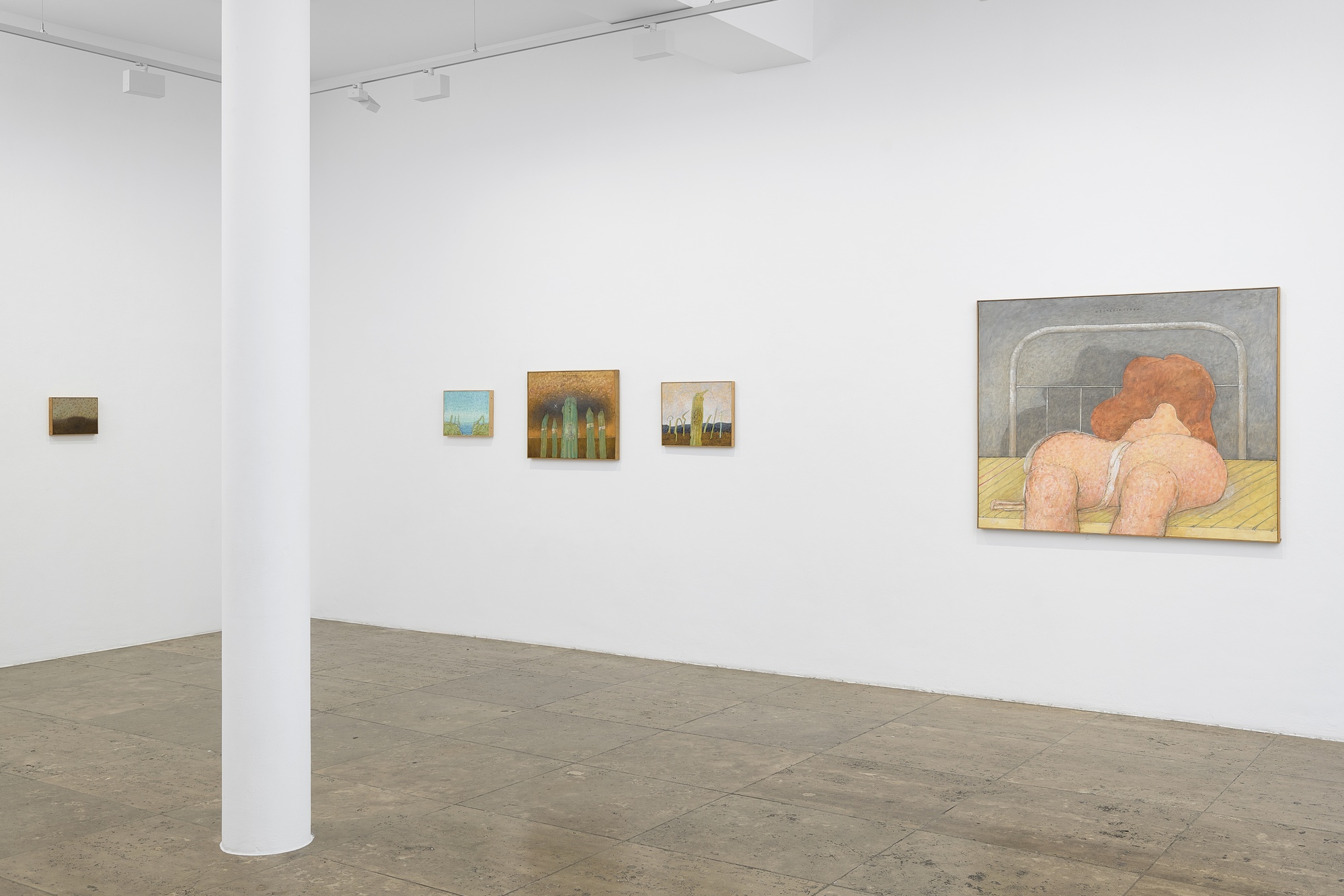
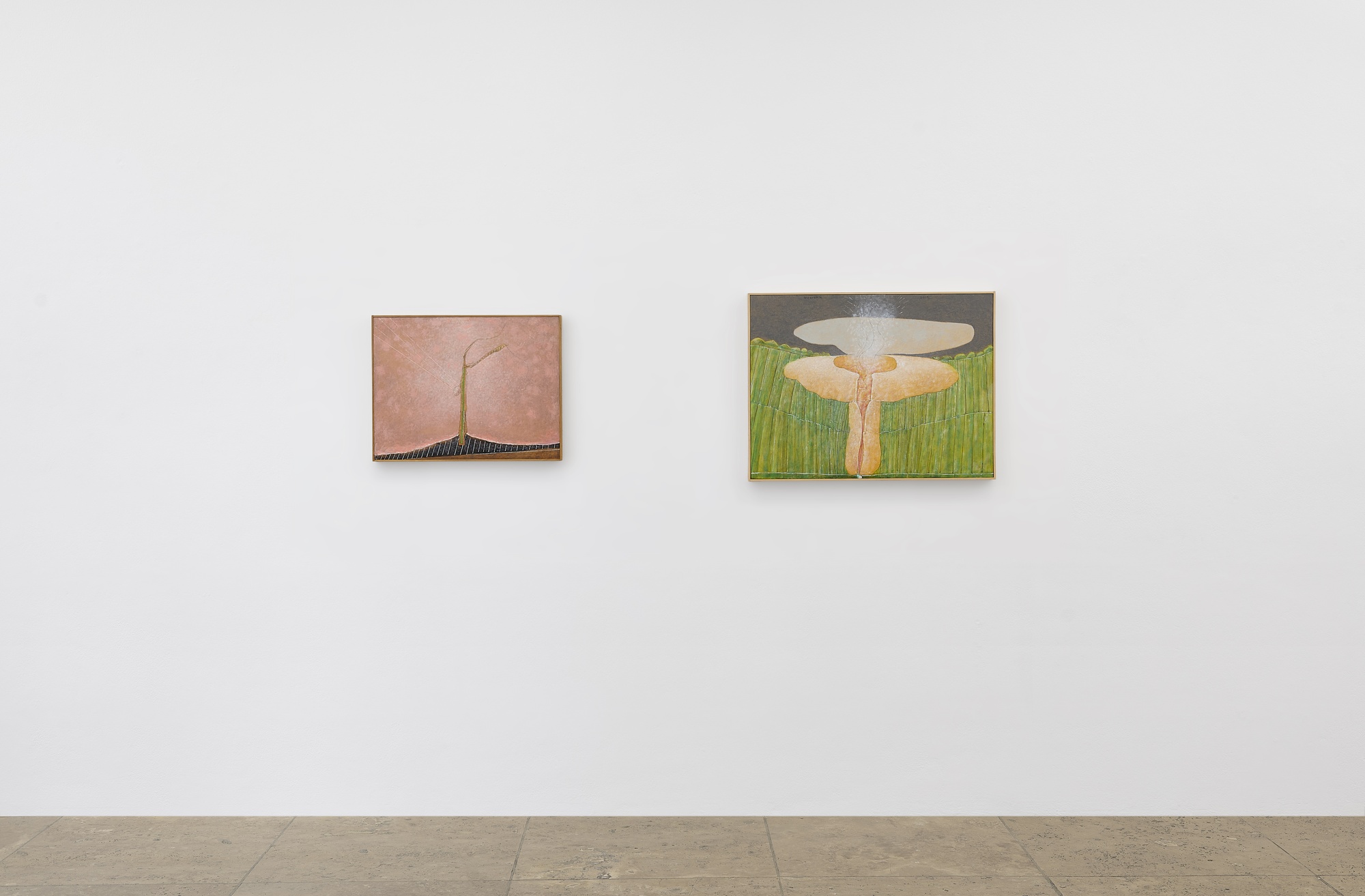
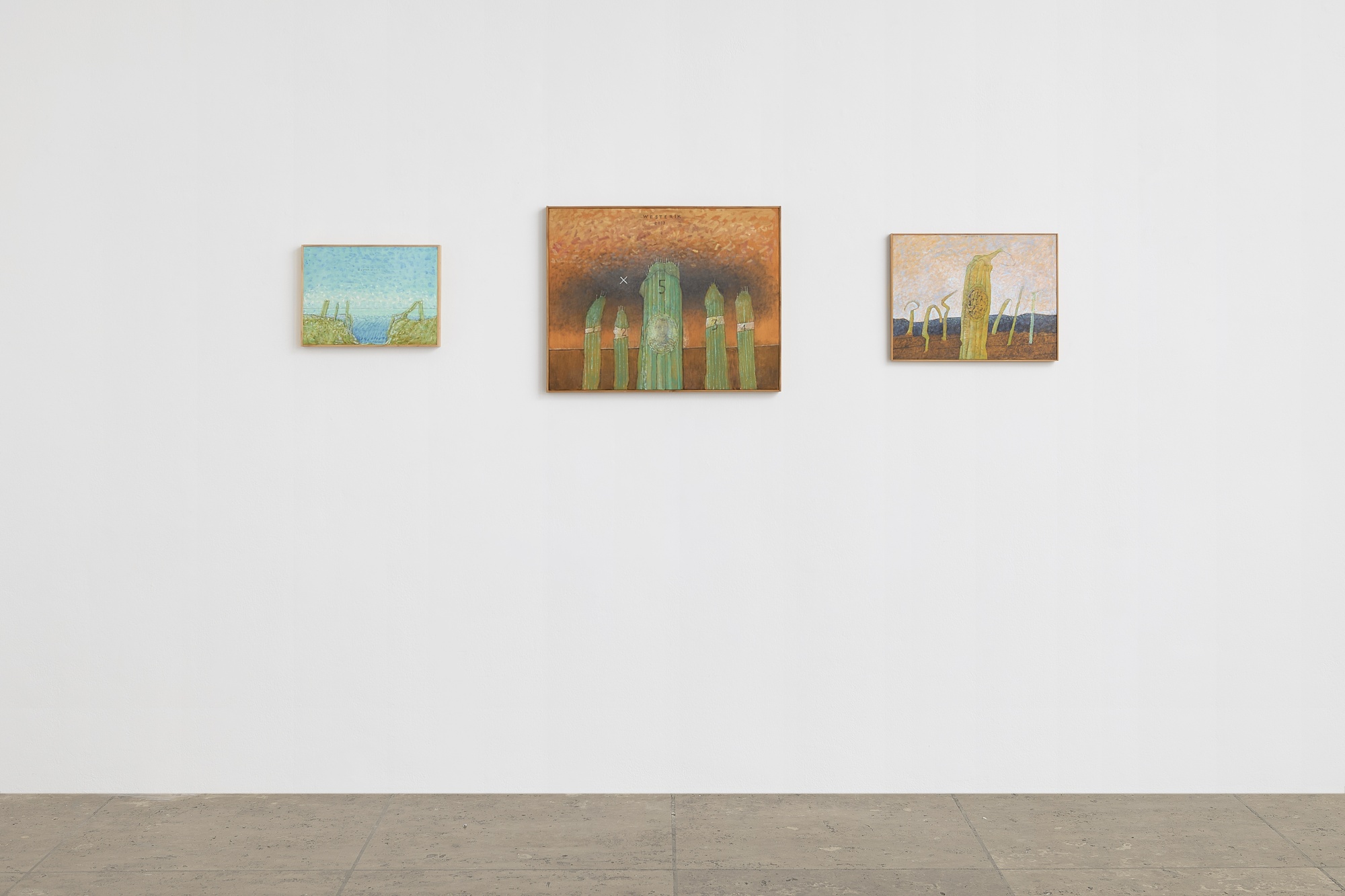
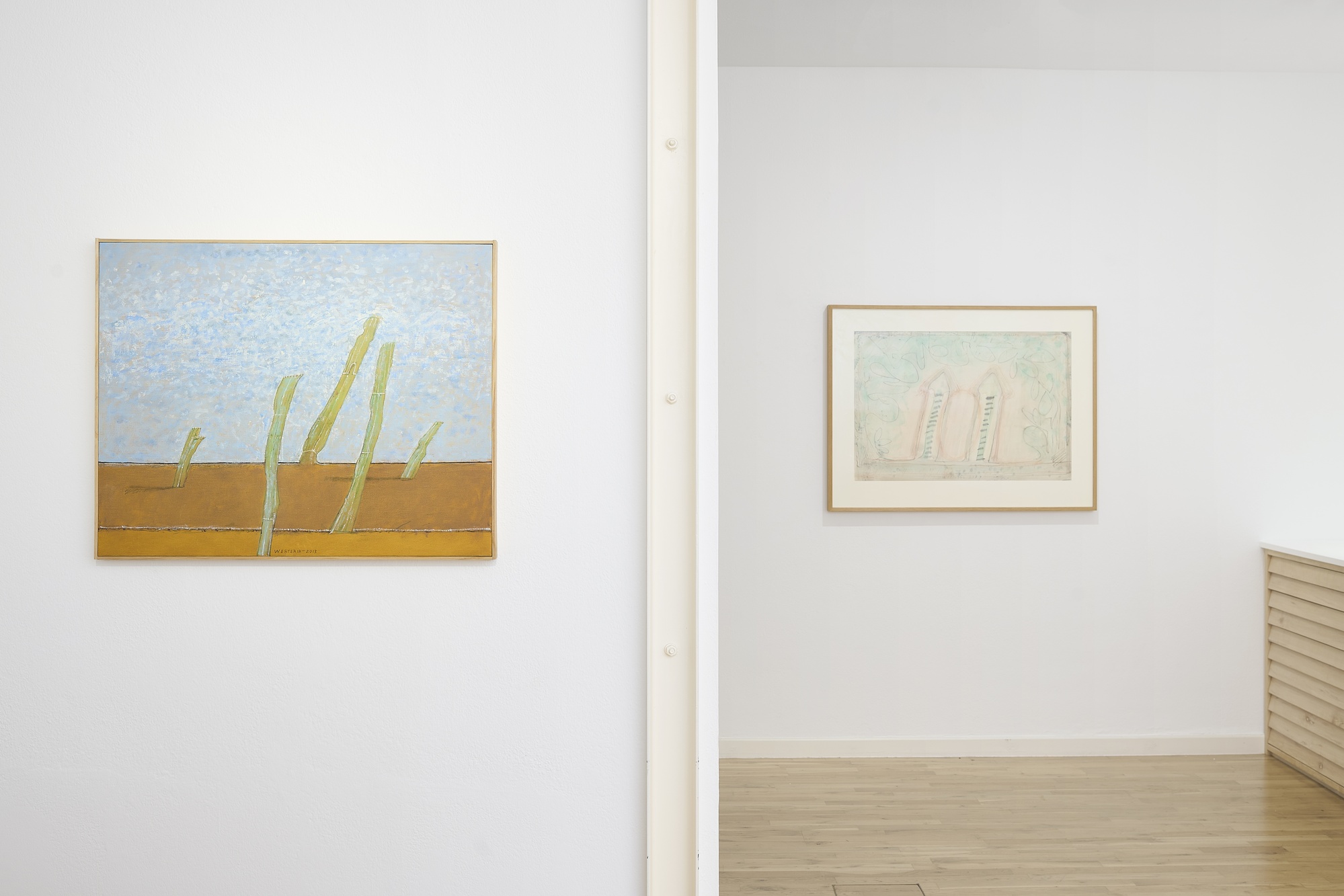
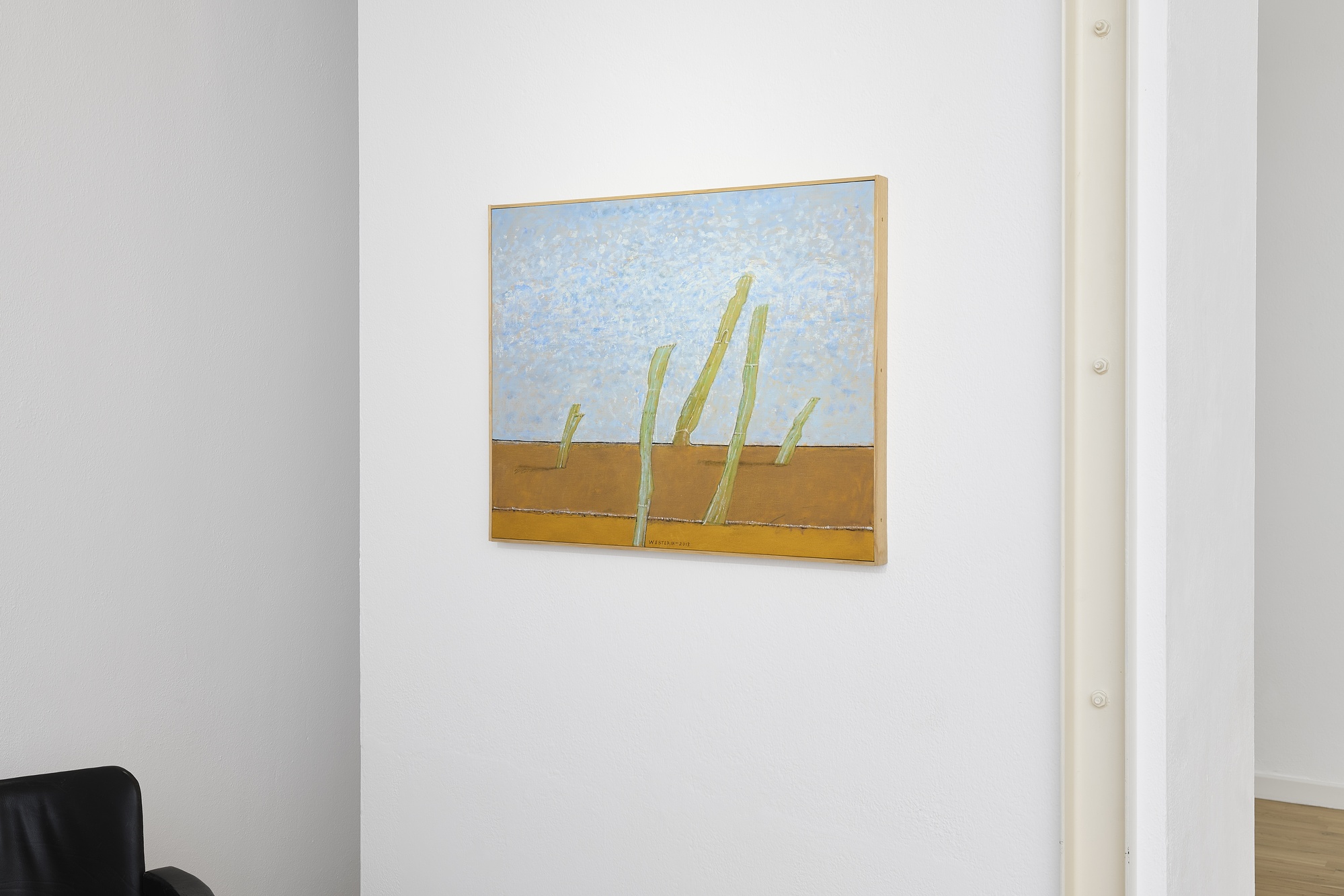
Blades of grass stand silhouetted against the sharply delineated horizon of an unreal landscape like individual brushstrokes. Yet the austere scene might just as well be a close-up of a reclining body that meets its surroundings at the horizon line, with raised hairs acting as a kind of sensory transition—from the inner realm of perception to an unspecified outside world.
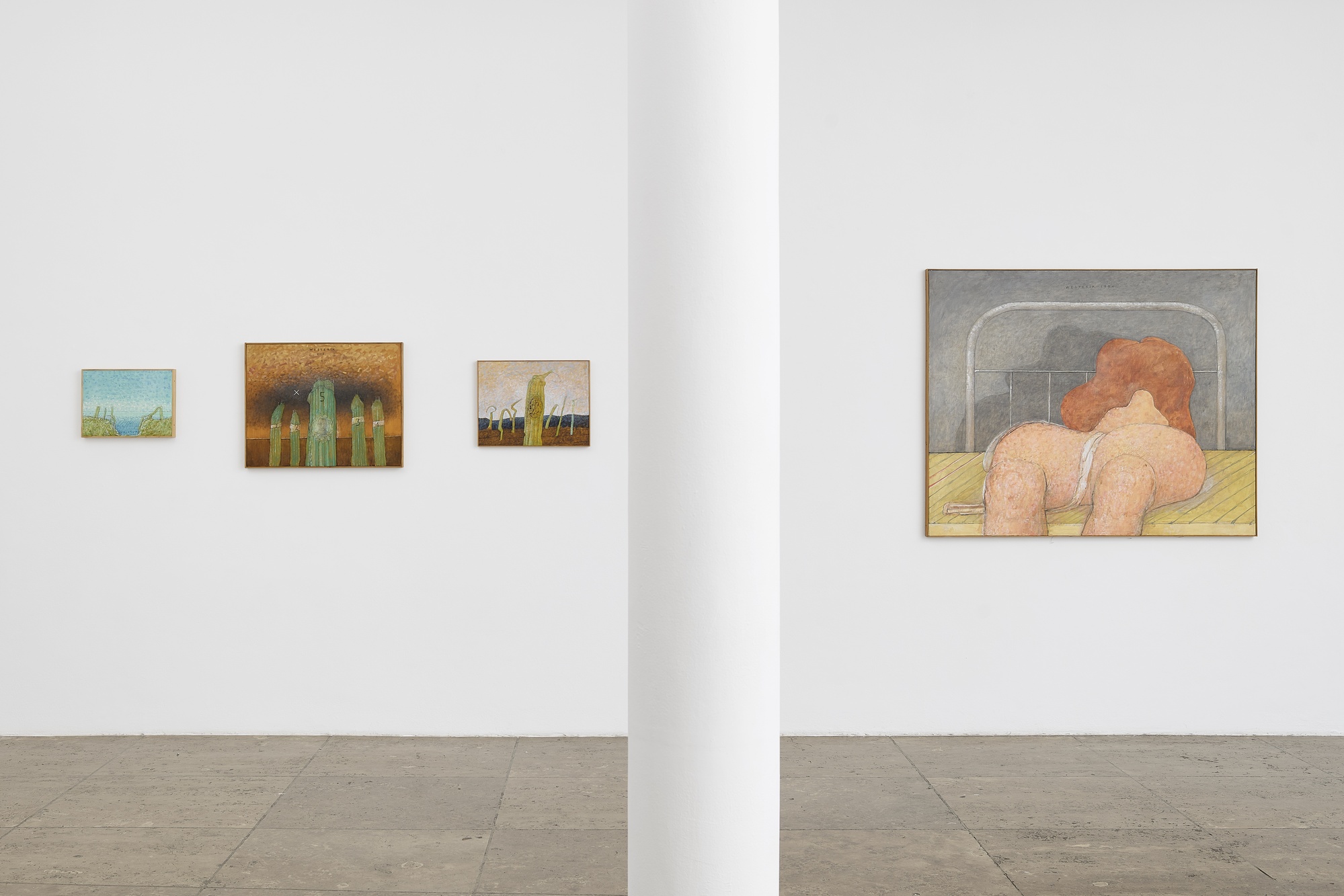
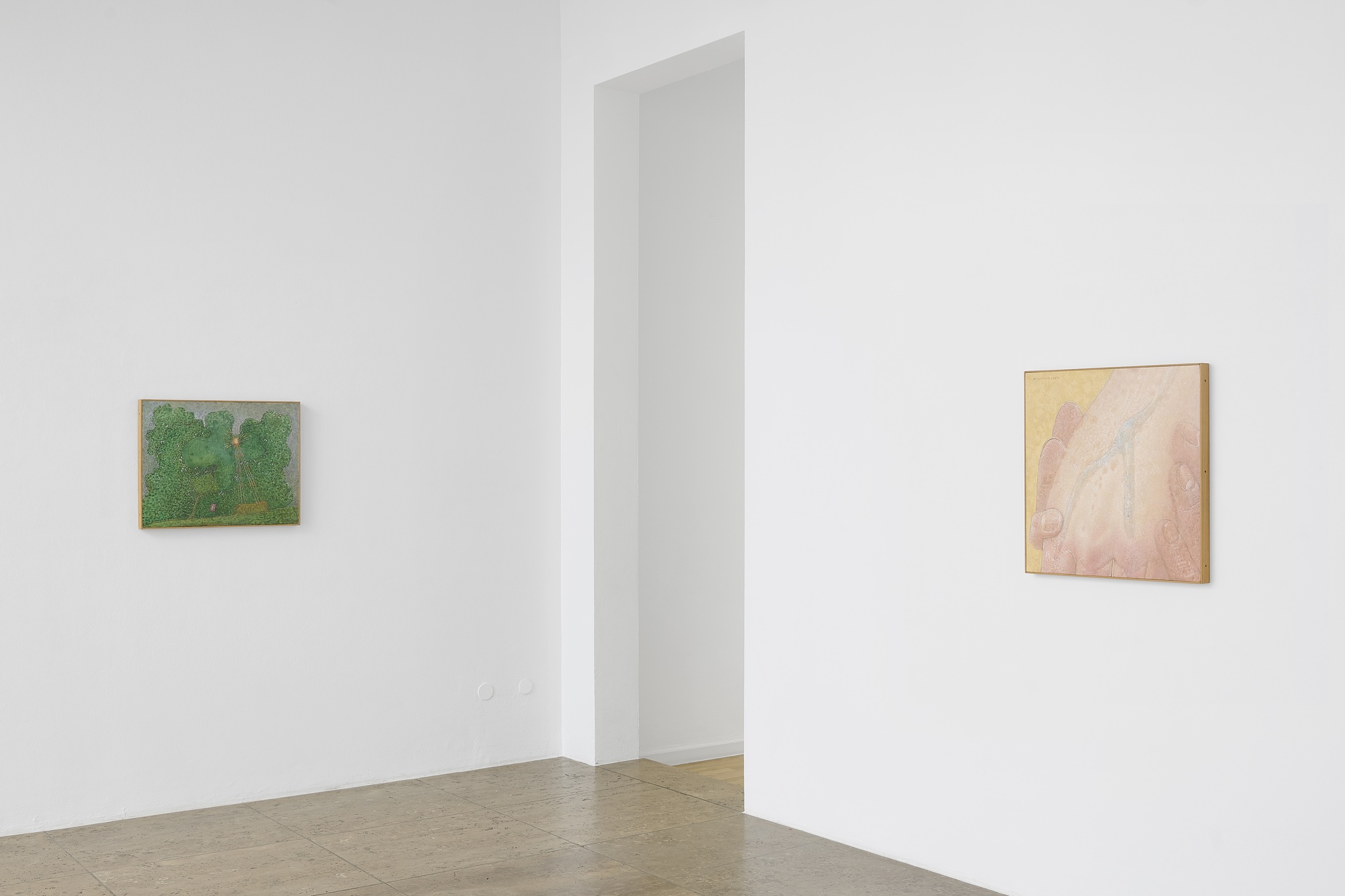
There are many such pictures in the oeuvre of the Dutch painter Co Westerik (1924–2018), works in which the distinctions between painterly genres are blurred, in which portraiture, depiction of the body, and landscape painting would seem to blend into one another. This phantastic momentum is engendered not by the representation of unknown sights but by a shift in perception itself—in the gaze upon ordinary scenes.
From the 1960s until his death, Co Westerik built a focused and singular oeuvre of paintings and drawings that combines compositional latitude with technical mastery, evolving largely independently of the stylistic and discursive concerns of his time. Read More
Westerik embarks on his career in the early 1940s in various group contexts. During these years, he pursues a distinctively narrative pictorial idiom tinged with Surrealism. In the late 1960s, he then begins to devise a personal style of figuration and an idiosyncratic set of motifs, which he continually varies and refines over the decades that follow.
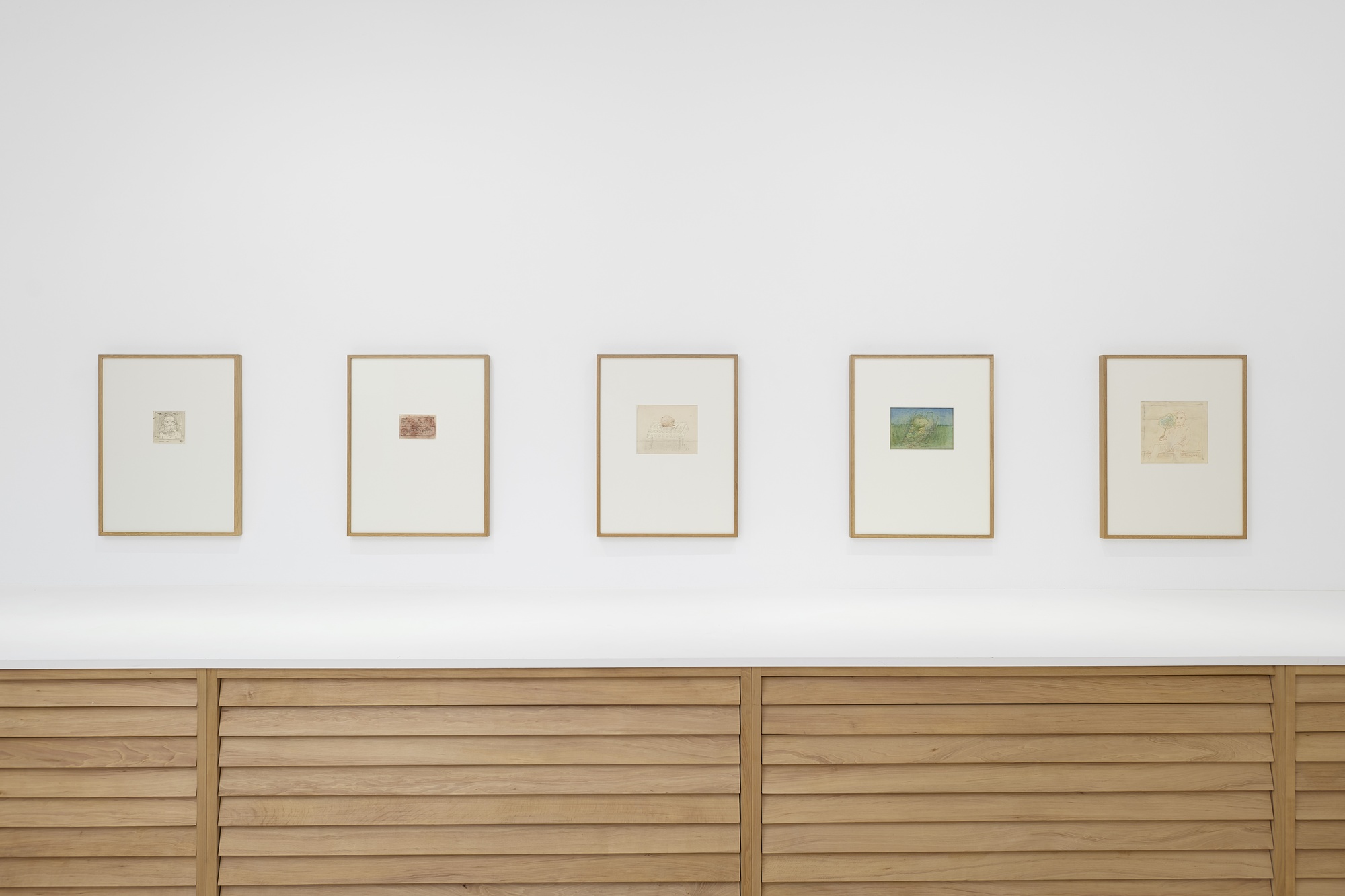
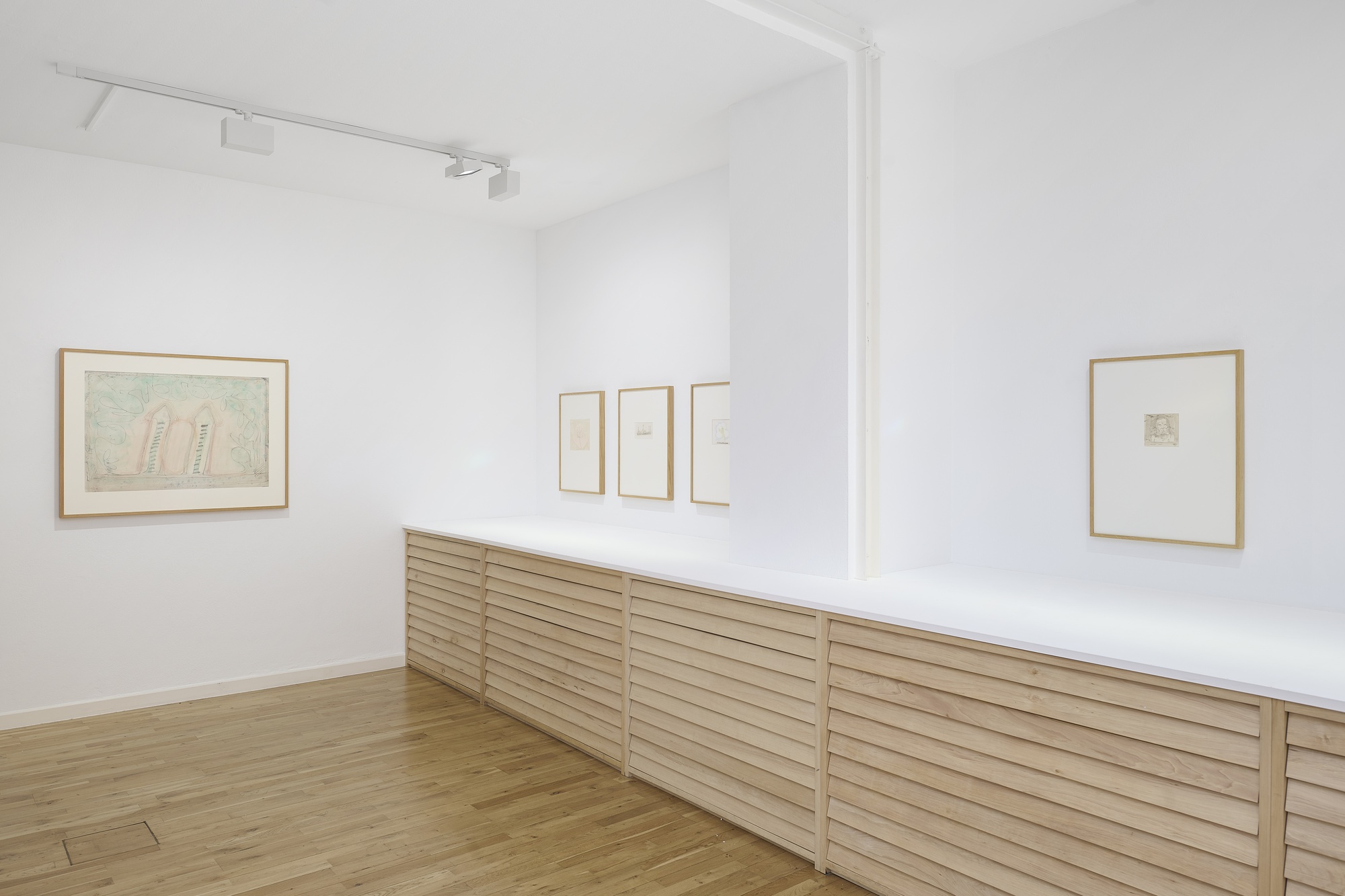
Westerik paints no more than a handful of pictures per year, employing a classical multilayered technique that has been practiced since the Renaissance and Early Netherlandish painting. Each work is based on a detailed conceptual sketch, often measuring just a few square inches. In a second step, this sketch is accurately transferred to the wood or canvas support medium. Next is an imprimatura in tempera, which he then works out in oil or alkyd paint. Besides the extensive body of drawings, which evinces a more open-ended and immediate approach to the subjects and themes of his art, his meticulously kept diaries document the discipline and forensic attention to detail with which Westerik crafts his paintings on the levels of both motif and technique.
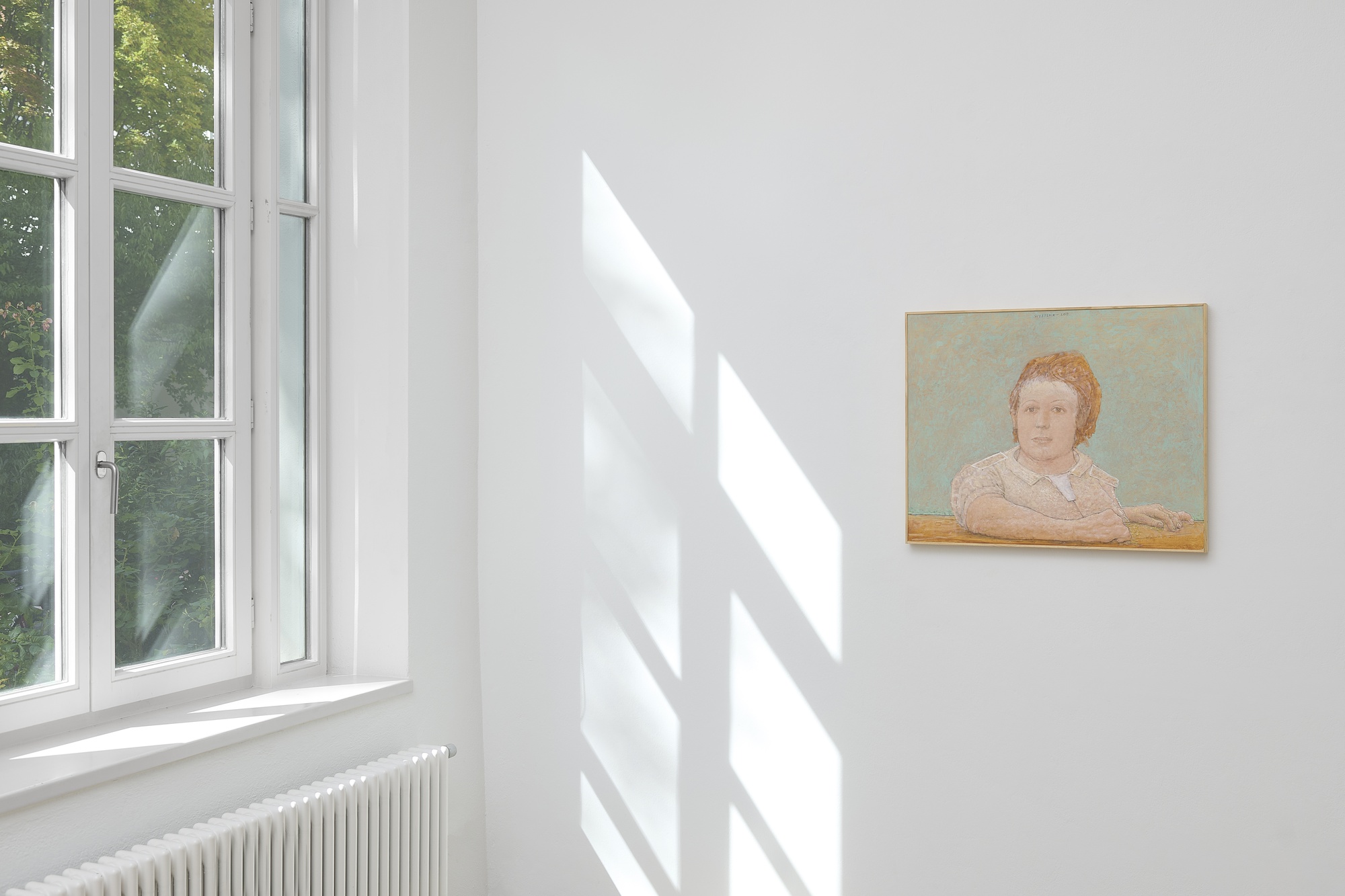
The motifs are typically drawn from the immediate surroundings of the artist’s day-to-day life: family members, everyday scenes, figures in the open countryside, in the studio, in the kitchen, in bed. Their depiction, meanwhile, is highly unconventional. Westerik often pushes perspective to its limits, enlarging and distorting his motifs to the edge of formlessness. Such shifting of scales intensifies the perception of the mundane—the familiar becomes new and unknown. Yet his scaling follows neither the principle of Surrealist distortion nor the inflation of mundane objects practiced by the Pop artists among his contemporaries. Even when the perspective feels radical and unreal, as in his iconic painting Snijden aan Gras (Cut by gras, 1966, Collection Stedelijk Museum Amsterdam), or when a motif appears rendered in a kaleidoscope of perspectives, as in his Zwemmer (Swimmer), who is seen from several angles at once, Westerik’s painting remains committed to a realist mode. It reflects a genuine interest in the processual nature of life as it is experienced day after day in one’s own body.
These experiences resonate in two major themes of painting—landscape and the figure—that are often inextricably interwoven in his works. The body, in Westerik, is neither a bearer of psychological identity nor an idealized or erotic form; rather, it appears unadorned and concrete. Skin and veins, pressure marks, wrinkles, touches and injuries—elements usually located below the threshold of representational visuality—come to the fore. His bodies are not simply figures in pictorial space, closed volumes whose surfaces are viewed from the outside, but rather a fractured, existential landscape of experience. Skin functions here as a kind of epistemic boundary: as an ultrathin membrane that separates inside from outside—and as a metaphor for painting itself, as a surface on which a paradoxical visibility emerges that simultaneously conceals and reveals.
Westerik’s painting shows no inclination toward the expressive register. His pictures remain representational, precise, controlled—and are always clearly marked as paintings. The construction of perspective is left visible, usually built around a sharply drawn horizon line. Many of his paintings feature clearly recognizable traces of the painter’s hand and monochrome areas. All scenes are immersed in an even, diffuse light, without any choreographed or dramatic lighting. The signature, prominently placed within the picture, further underscores the artificiality of the pictorial construction.
A form of painting comes into being on this carefully balanced playing field that transcends the eye’s perceptive capacity as the sole benchmark of pictorial realism. In its obsessive focus on sections, close-ups, and the monumentalism of individual details, it opens up a broad spectrum of perception capable of conveying both visual and sensory impressions. A realism of experience—as simple and complex, as unstable and fluid as every moment in the continuum of time.
Leo Lencsés
Co Westerik’s work has been showcased in numerous retrospectives, including at the Stedelijk Museum Amsterdam, the Museum Boijmans Van Beuningen, the Kunstmuseum Den Haag (formerly Gemeentemuseum Den Haag), and the Groninger Museum. All of these institutions hold bodies of work by the artist in their collections. Westerik was awarded the Rembrandt Prize, the State Prize for Fine Arts of the Netherlands, and the Silver Medal of the São Paulo Biennial, and appointed Knight of the Order of the Netherlands Lion.
The most recent solo exhibitions of his work were presented by Fergus McCaffrey, New York (2025), and by Sadie Coles, London (2019 and 2024).