Opening on November 20, 2025, 6–9pm
Table of Contents
Until the act of seeing engulfs our eyes
Laura Vallés Vílchez
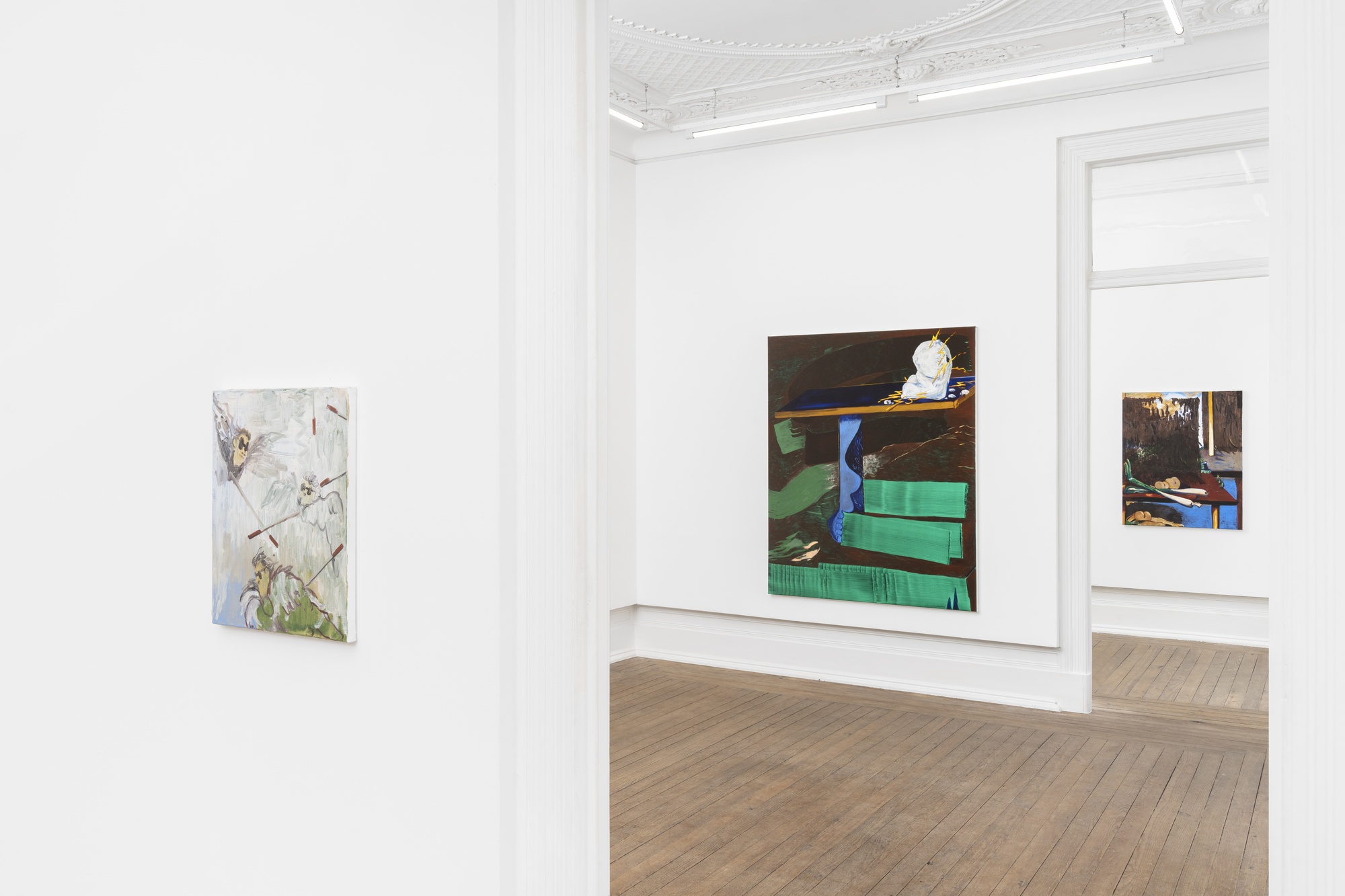
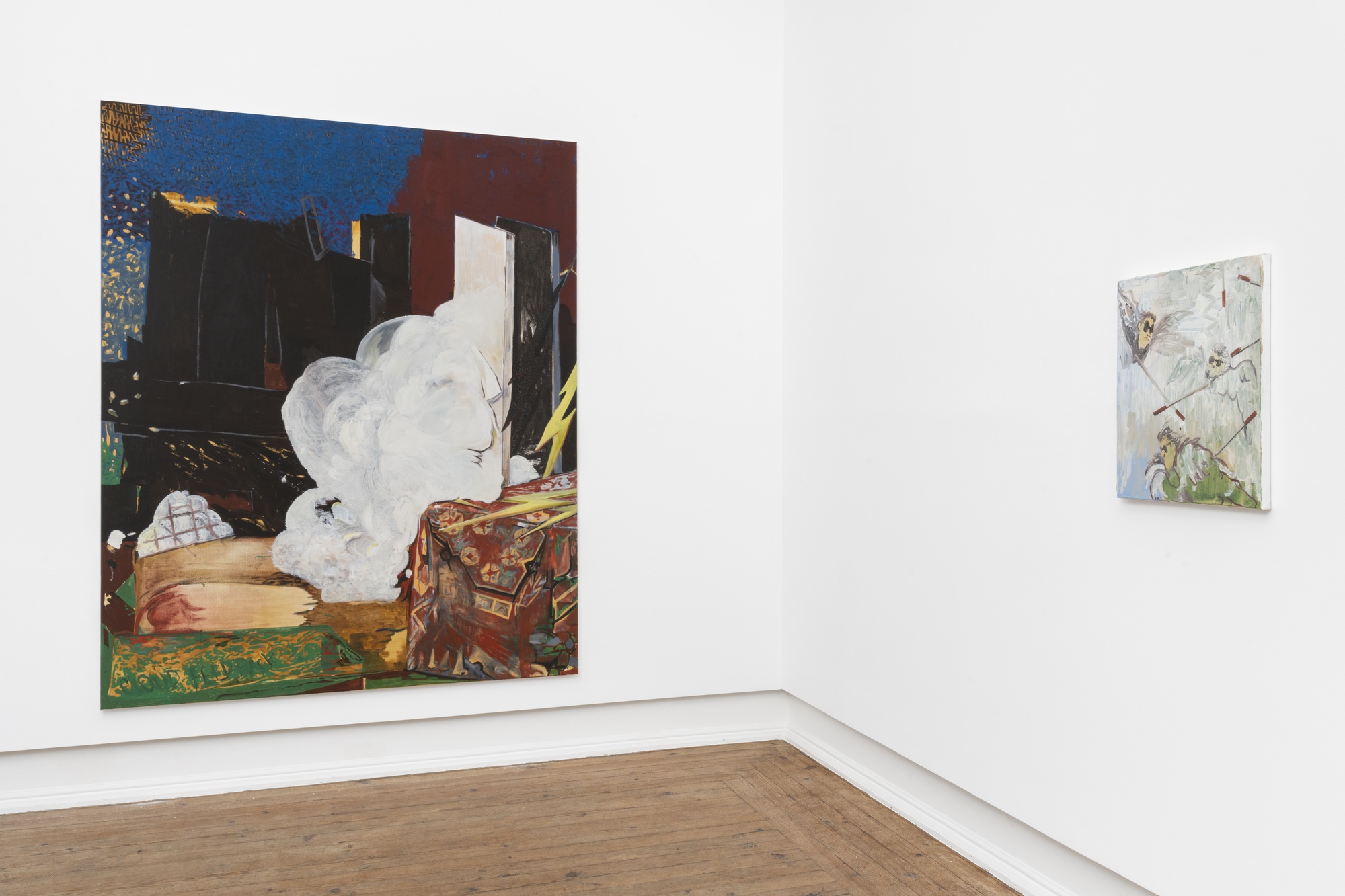
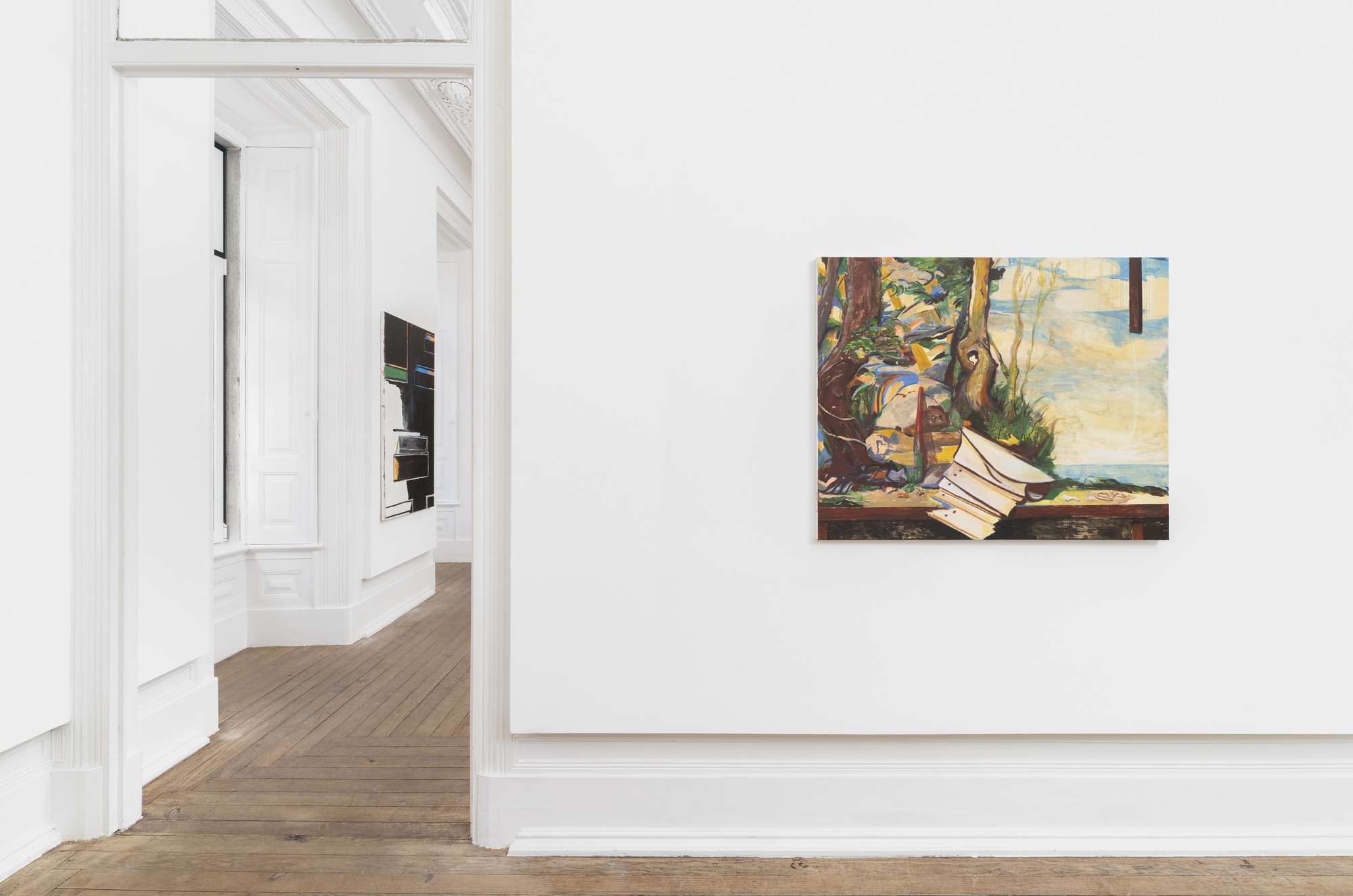
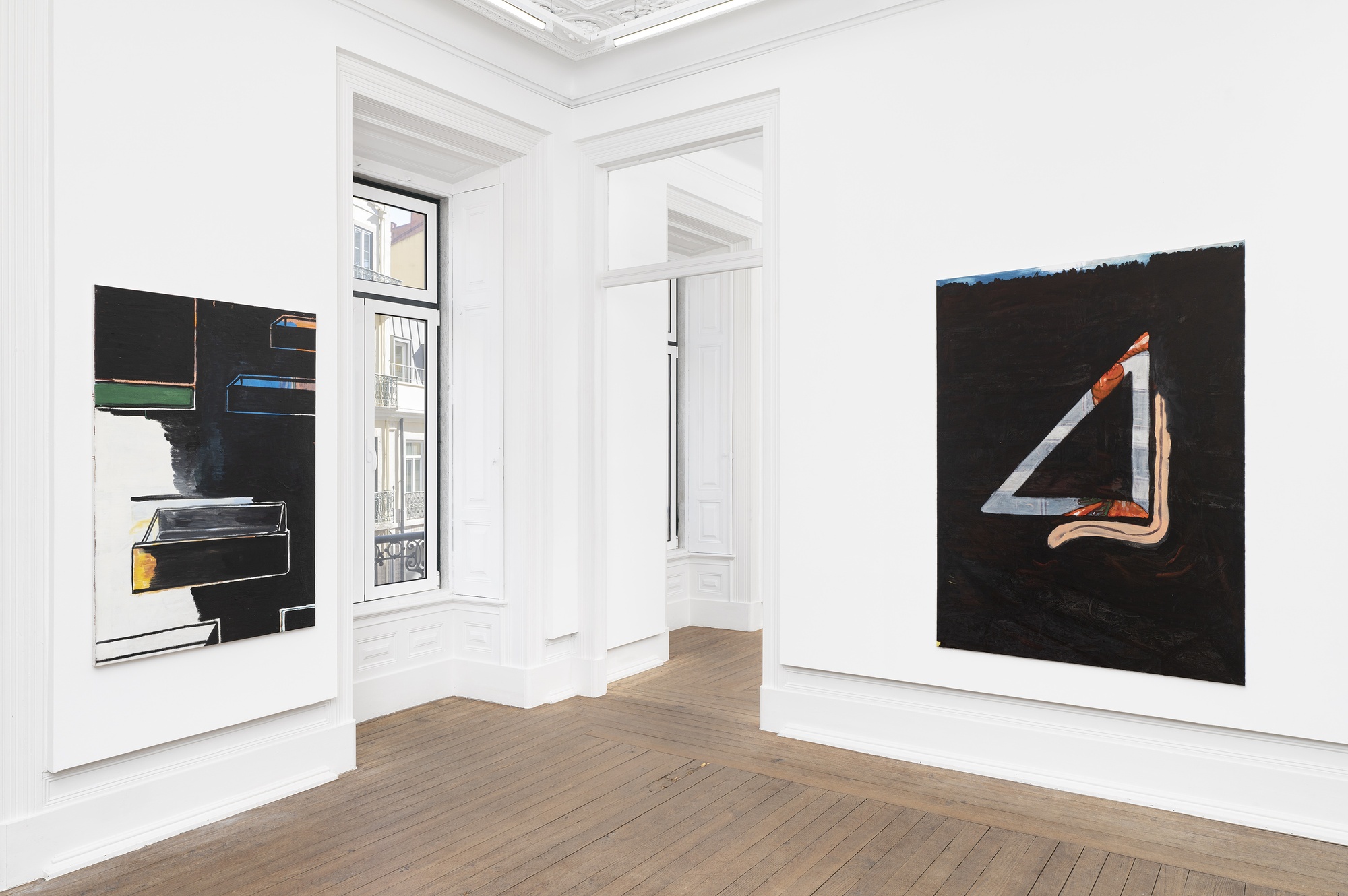
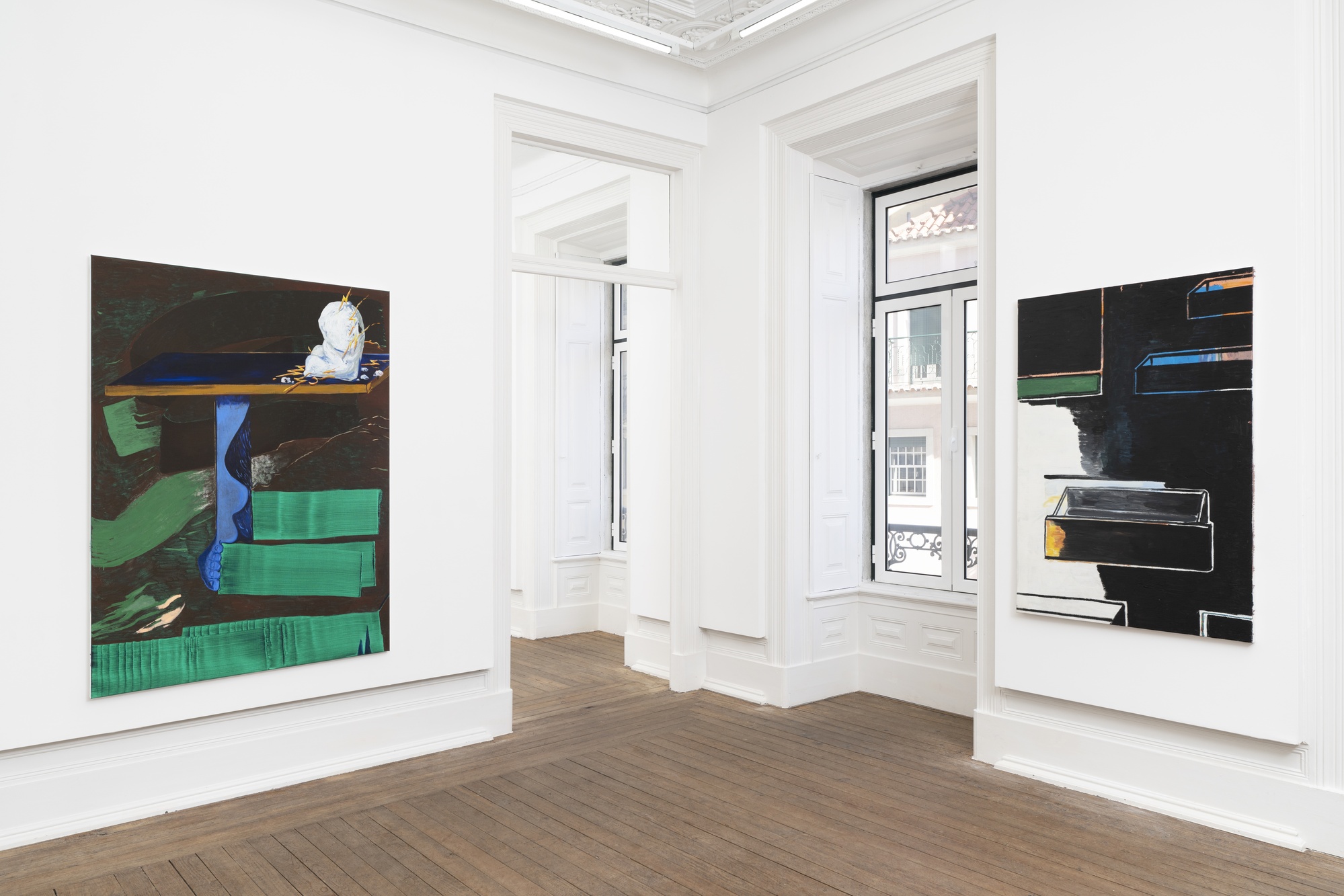
There’s a kind of editorial tenderness in Rasmus Nilausen’s paintings — a recurring gesture of someone rearranging meaning mid-sentence, editing thought without erasing its first draft. Table of Contents is an exhibition that unfolds like a book, one that never stops adding potential new chapters: each painting seems to be an attempt to locate where perception begins and memory ends. The artist’s canvases, hovering between still life, allegory, and notation, are not so much statements as footnotes, that is, marginalia to the act of seeing. If painting once aspired to permanence, here it becomes a document of shifting sightlines. The “table” in his title is both literal and structural: a compositional ground, a stage, and a metaphor for the editorial desk where fragments — fruit, brushes, language or ghosts of memory — are arranged into some provisional order. To edit, after all, is to care for the muddle without annihilating it. Read More
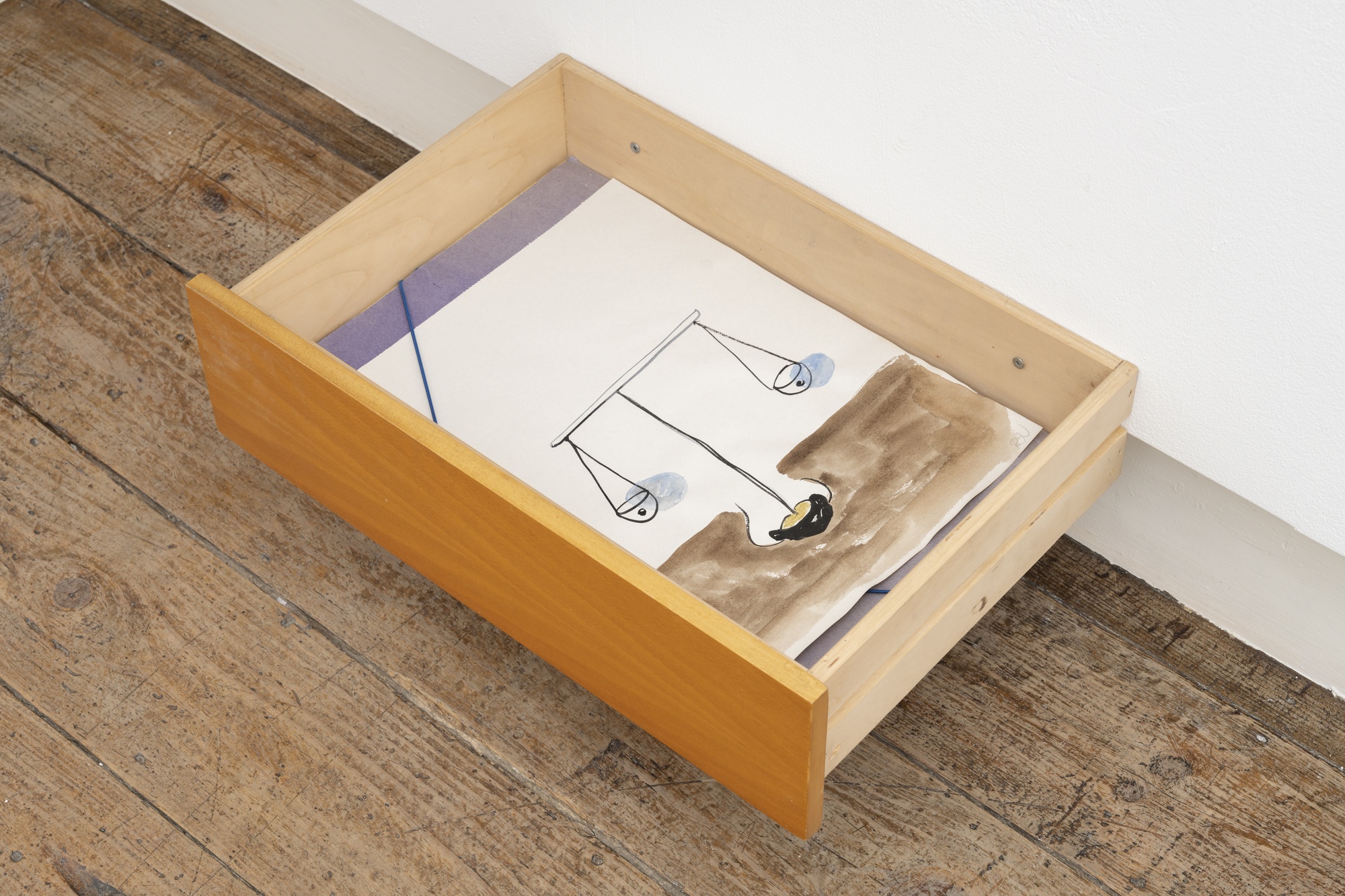
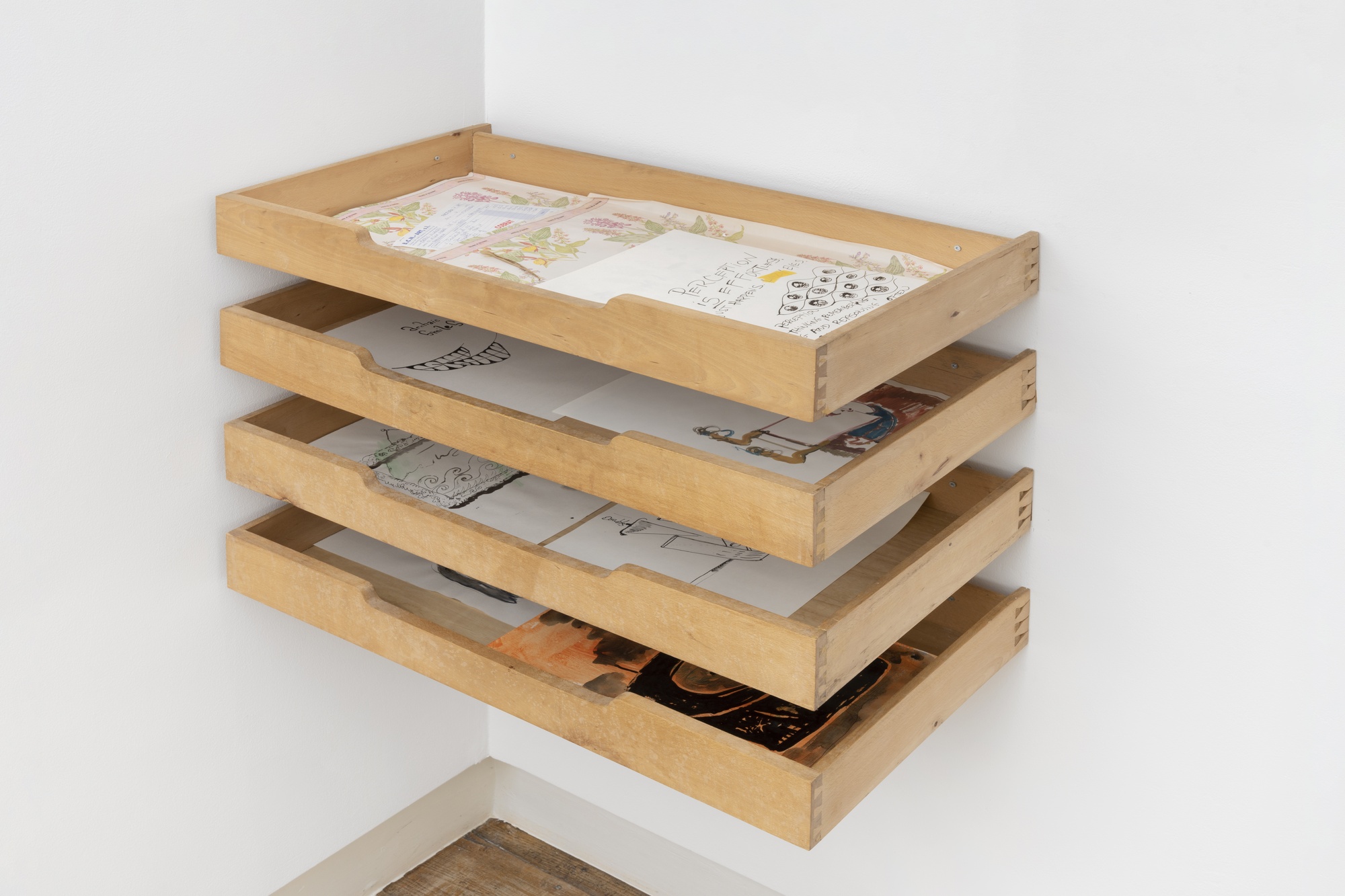
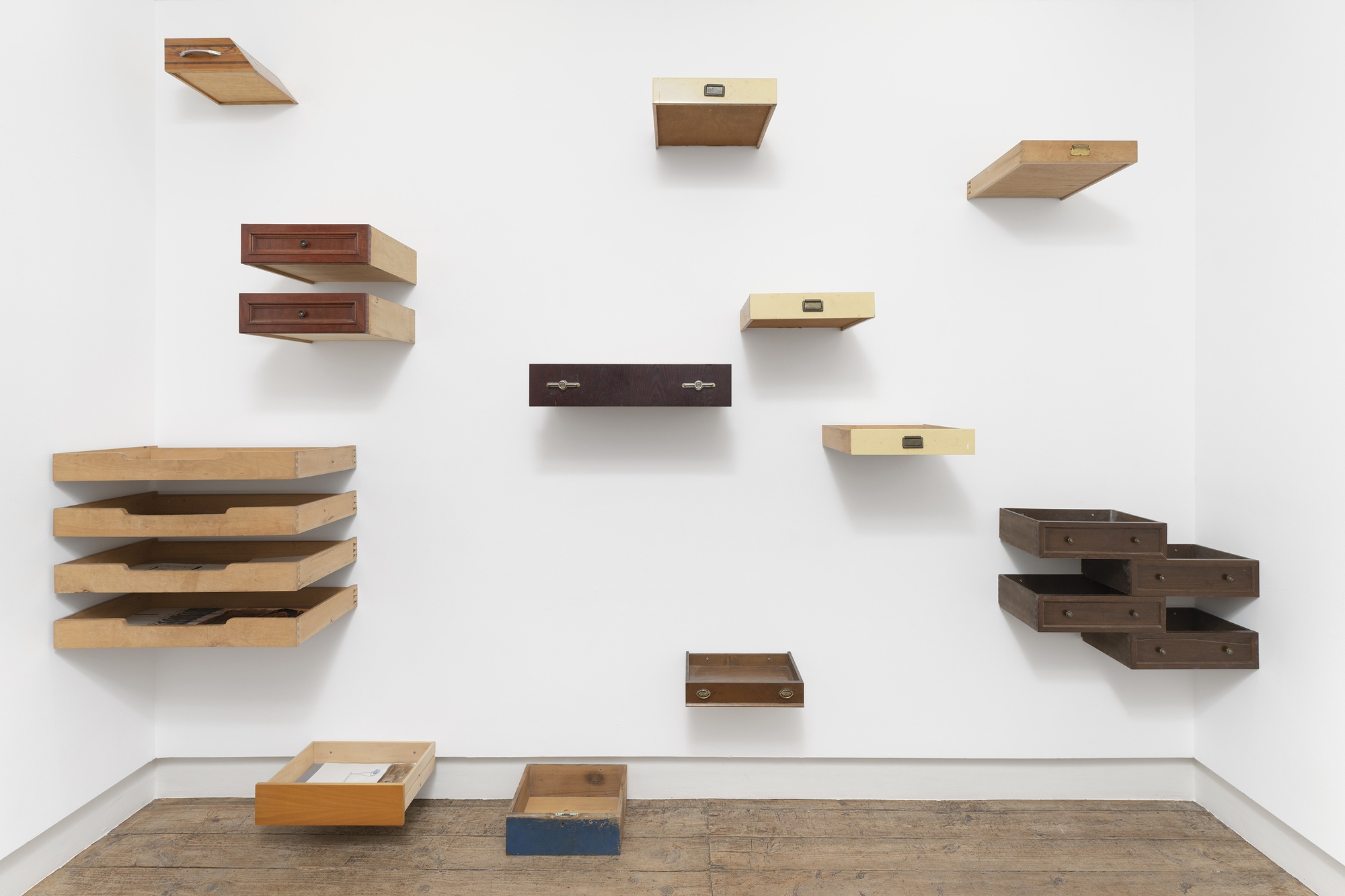
When I read through Rasmus’s own notes, I think of Simone Weil’s claim that attention, taken to its highest degree, is akin to a prayer. In my eyes, the artist’s attention seems to belong to that order. His paintings make room for doubt, for the slow sedimentation of perception. In Archive (2024), for instance, the artist recalls childhood attempts to categorise the world, building imaginary shelf-systems to store the day’s events. This archival impulse reappears across his work — drawers, grids, lists and linguistic tangles that mark the human need to systematise what resists organisation. But what happens when the shelves collapse, when memory overflows its categories? “Memory is almost full”, he writes under Feedback (2025) — a quiet, tragicomic phrase that could serve as the subtitle of our age. Yet the irony of painting in the digital century is not lost on him. His canvases act as analogue servers of the self, in other words, sites of storage and overflow. They are painted, repainted — doubted into existence. Ultimately, paint itself becomes a metaphor for data and yet, unlike the screen, it remains unhurried — each stroke bears its own latency.
If orientation is how we inhabit space, then Nilausen paints the act of positioning as an ethical practice. His recurring motifs are devices for finding one’s place within discernment. They suggest that seeing is not passive but relational: we must keep adjusting our footing on the moving ground of the muddle. Take Language Angle (2023–25): a carrot, a tongue, an angle — each an emblem of movement. The carrot as motivation, the tongue as both taste and speech, the angle as perspective. Together, they articulate how the act of seeing involves not just the eyes but the entire body — hungers, speech, moral position. In Rasmus’s words and worlds, perception is never neutral; the art of discernment bends, slips, misreads. You can see hesitation built into the surface. He writes fondly about misunderstanding — how angels and angles can so easily switch places — and that slippage feels central to his method. See Blind Angels (2024): to paint is to misread the world deliberately, with care.
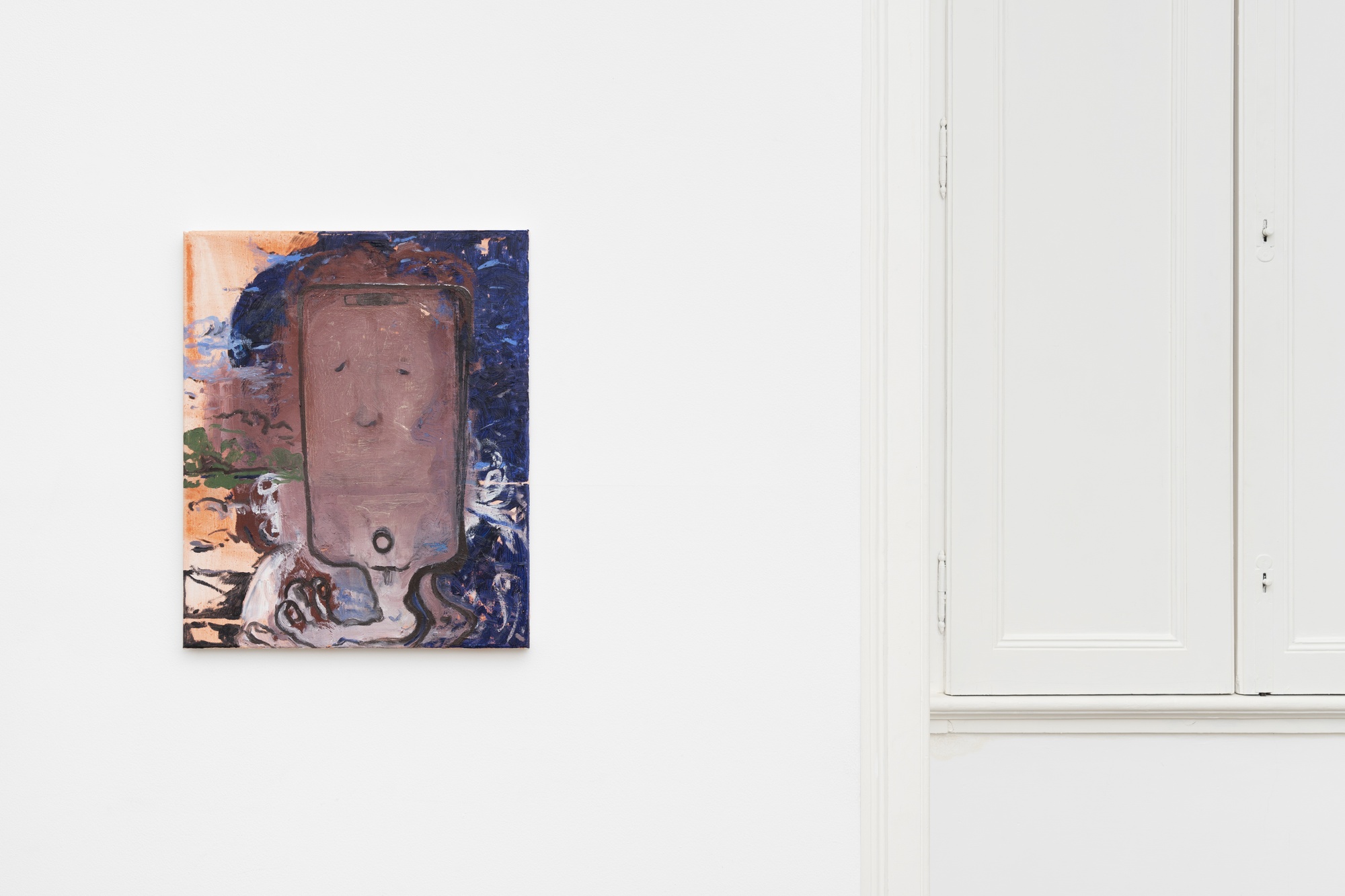
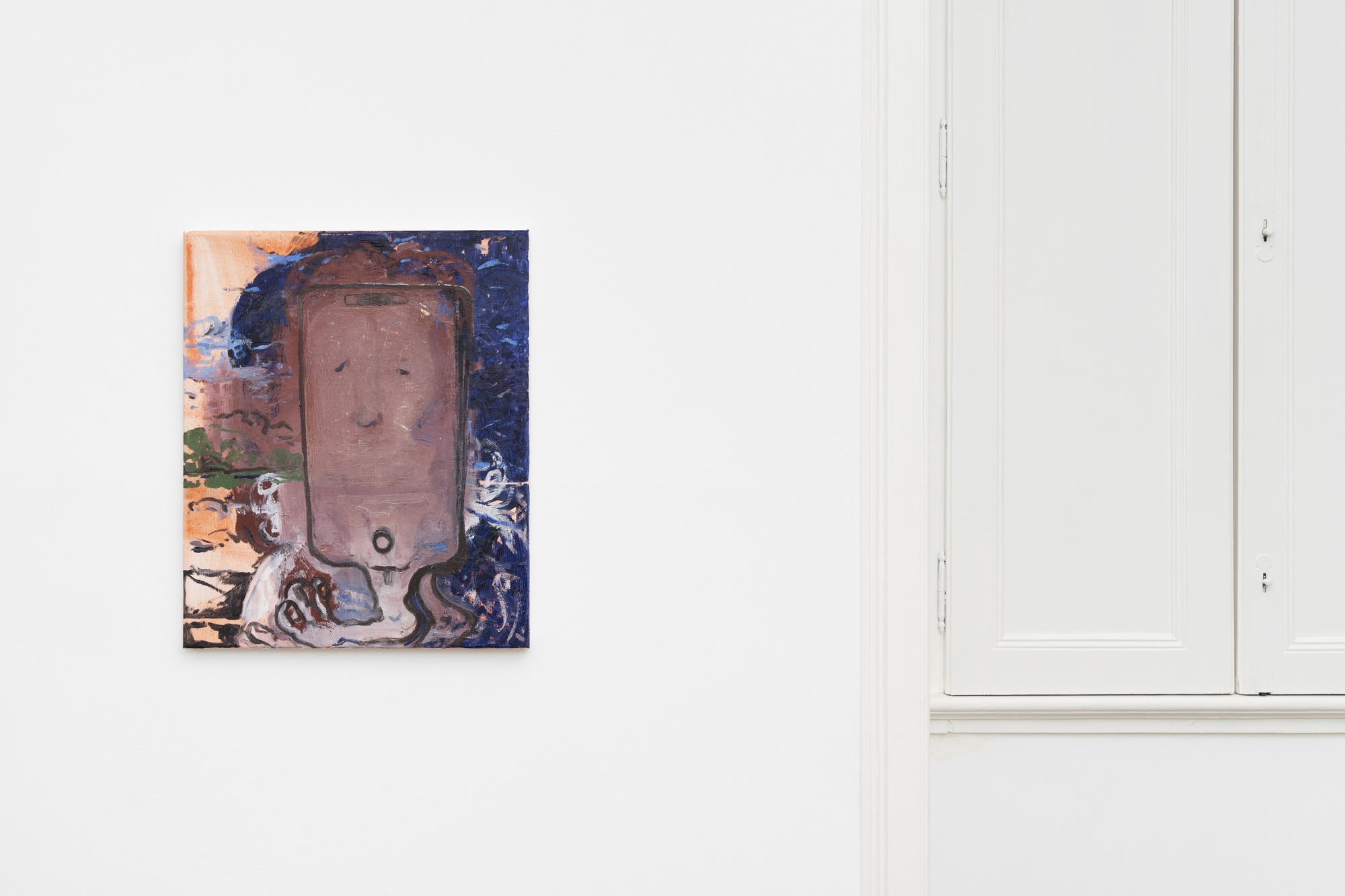
There’s humour too — the soft laughter of self-recognition. Self-Portrait as a Phone (2025) might sound ironic, but it’s also gentle. The painting acknowledges our contemporary condition: a constant oscillation between intimacy and mediation, between seeing and being seen. The phone becomes a mirror, the new still life object through which presence circulates. This self-portrait extends the inquiry of earlier propositions where punctuation marks and digital icons became surrogates for human gestures. What has changed now is the emotional temperature: what was once witty and conceptual now feels personal, almost devotional. These new paintings look inward without nostalgia. They ask what it means to perceive, to remain attentive when the world keeps refreshing itself faster than memory can follow.
Each work deals with thresholds between seeing and naming, recalling and neglecting. The titles sound like chapter headings for a book to come, but they also describe psychological states (Self Made, Archive, Feedback, Distribution). Maggie Nelson writes in Bluets: “Suppose I were to begin by saying that I had fallen in love with a colour.” Rasmus Nilausen might answer: “Suppose I were to begin by doubting a word.” His blues, browns, and pale yellows are not expressive but cognitive — pauses, ellipses in thought. The spaces of his canvases hold both saturation and restraint, that is, attention without possession.
And yet what keeps me returning to the artist’s work is not only what it says but how it insists on being made. The physicality of the paintings is the quiet engine of his thought. Each brushstroke is neither entirely confident nor hesitant; it trembles somewhere in between, as if the pigment itself were testing its conviction. Paint becomes a form of inquiry, and its material density gives body to the philosophical agitation that moves through his writing. One senses that the canvases were worked and reworked, but without the anxiety of correction. The paint doesn’t conceal its revisions; instead, it discloses the rhythm of reconsideration, allowing earlier gestures to remain partially visible, like ghosts of sentences crossed out but still legible beneath the final draft. This refusal of closure is perhaps Rasmus’s most tactile form of ethics. To paint, for him, is to keep doubt visible.
His palette, though quiet, seems to be full of intent. The blues, browns, and ochres are not nostalgic tones but thinking pigments. They feel drawn from the world of desks and shadows, of the everyday table rather than the transcendental sky. The blue recurs as both symbol and mood: once divine, now digital, another form of storage — the “cloud” in Feedback that holds too much memory. Brown, meanwhile, grounds everything. It is the colour of furniture, archives and soil, of what remains after brightness has faded. Even his yellows are wary of joy; they seem to flicker like thought catching the light before it disappears. There’s a humility in this chromatic restraint — not minimalism but measured empathy. In my eyes, these colours refuse spectacle; they invite proximity. To look at one of his paintings is to experience time slowing down, as if the pigments themselves were deliberating over whether to stay opaque or turn transparent.
If his earlier works flirted with the graphic clarity of digital symbols, these new paintings seem more porous, more-than-human. The material handling has grown looser, more aqueous. Edges bleed; outlines hesitate. Oil, usually the medium of permanence, behaves here like watercolour — thin, trembling, reversible. As though the paintings want to remember that every gesture is temporary — a fragility that gives them their pulse, a painterly theology of doubt where opacity and translucence coexist like faith and its questioning.
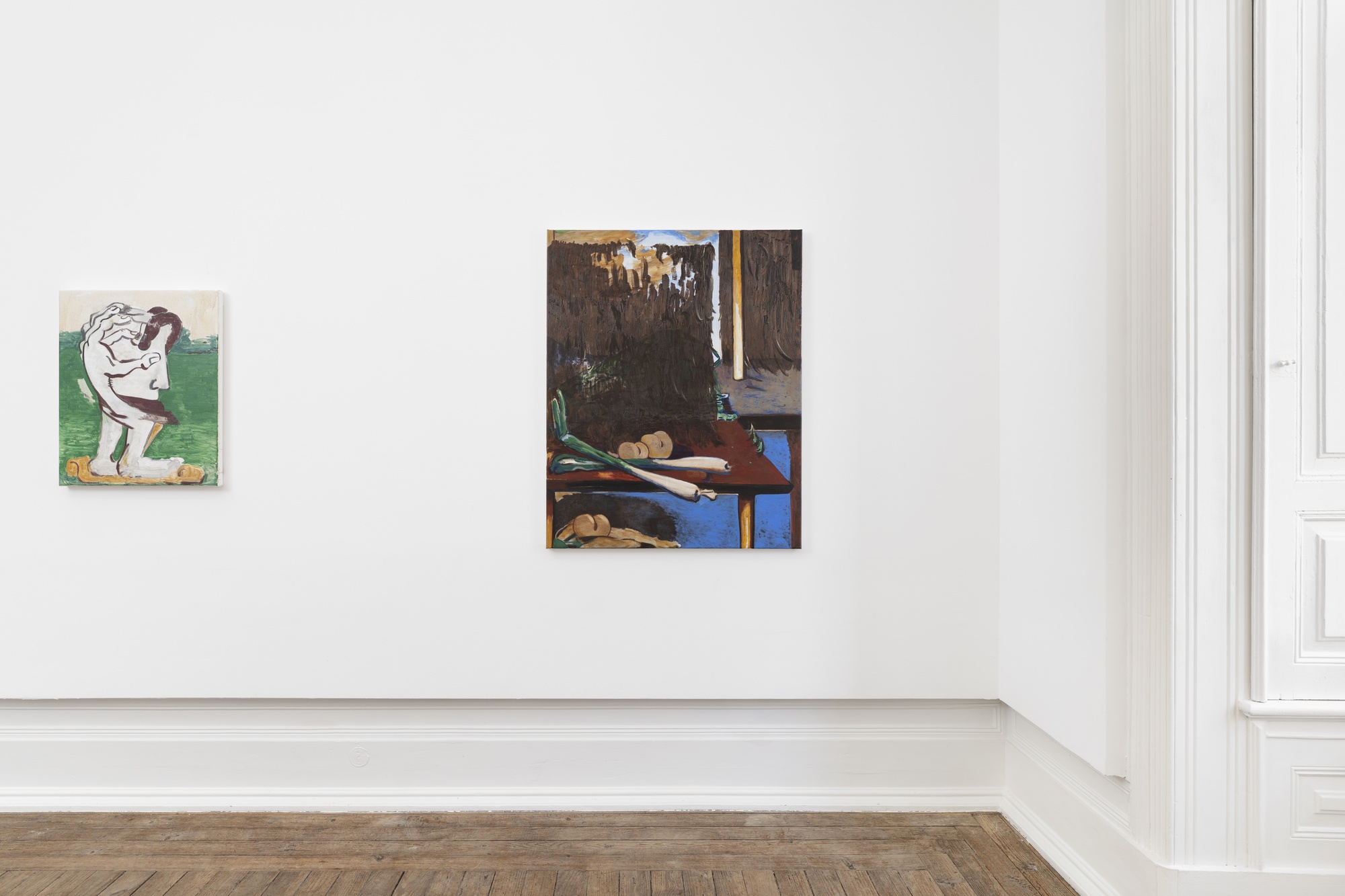
Even his recurring motifs are material studies in balance and instability. The painted table, sometimes overflowing with objects, sometimes empty, becomes the measure of what remains when language falters. These objects feel both ancient and provisional, suspended between usefulness and symbol, between hand and idea. In this way, the Table of Contents can also be read as a study of surfaces — how they hold, reflect, and betray, as in Still Life with Leeks and Fringe (2025). Each painting is the residue of a conversation. The materiality of these works insists that thought is never abstract. Oil paint carries weight and thickness, resisting the clean transparency of digital seeing. In an era of immaterial images, Nilausen’s insistence on slowness — on drag, on the time it takes for a surface to dry — is radical. His paintings are temporal machines, inviting us to embody the unhurried art of discernment.
Looking closely, one begins to sense that his colours operate like syntax. The thin washes of brown and grey act as conjunctions; the sharper blacks, as periods; the hesitant blues, as ellipses. The paintings read like sentences still forming — grammars of light and hesitation. They are neither declarations nor descriptions but pauses in between. In this suspended space, material and mind converge. Paint and language are treated as siblings — both slippery, both prone to error, and capable of truth only when they admit their incompleteness. Perhaps this is why his palette feels so ethical: it doesn’t perform sincerity; it enacts it through the very instability of its material. To see these works is to witness an ongoing negotiation between surface and substance, attention and surrender, knowing and not knowing.
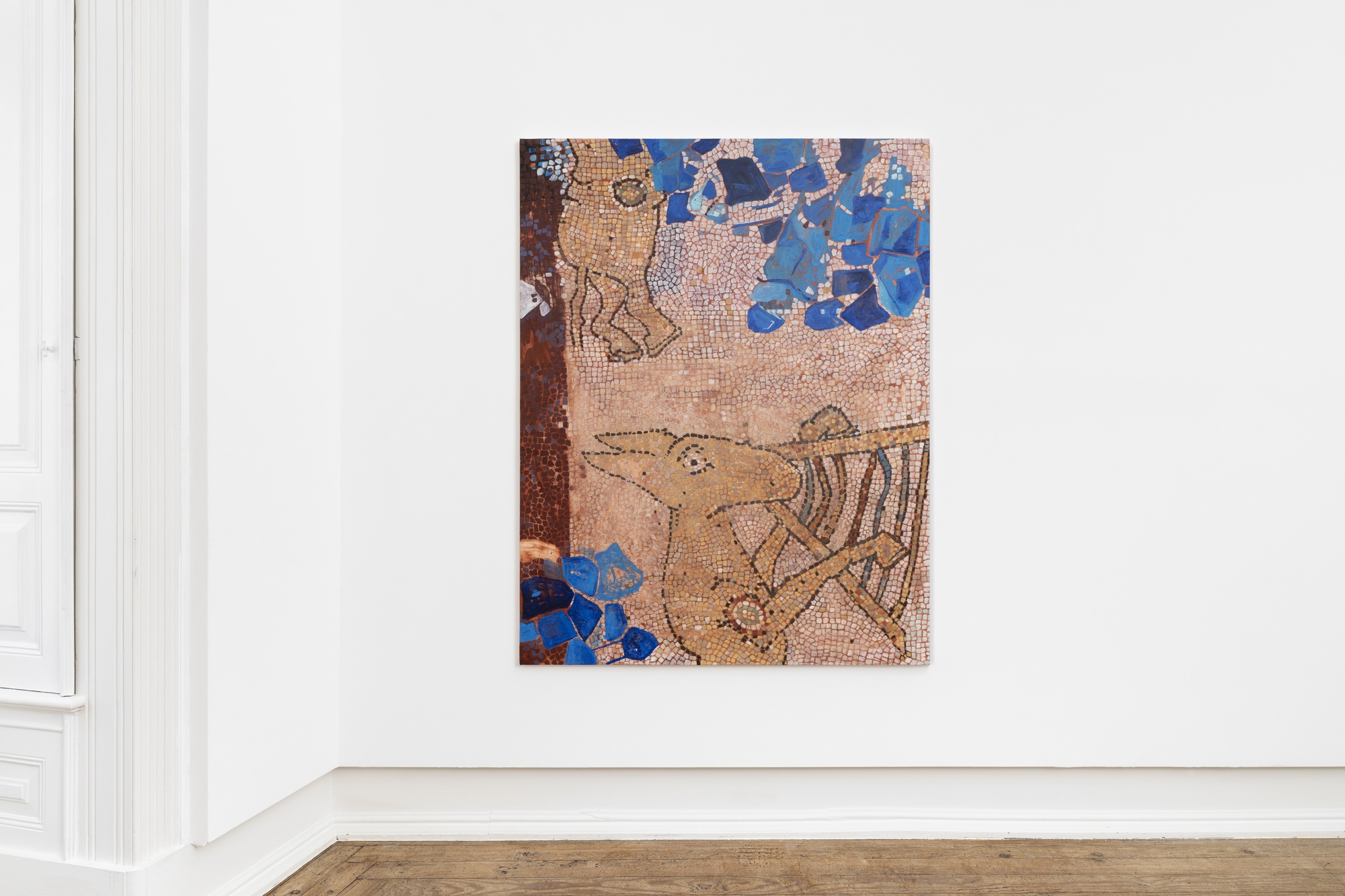
And yet, his paintings are not ascetic. They are full of movement, humour and a kind of metaphysical slapstick. In Asinus ad Lyram (2025), the artist borrows from a medieval mosaic — a donkey playing the lyre — to meditate on stupidity and spectacle. “What’s so attractive about flamboyant stupidity?” he asks. The question could perhaps describe our collective addiction to noise, to outrage, to the affective economies of modern life. But in his hands, the donkey also becomes a figure of humility — the fool who keeps playing despite knowing the tune is absurd. There’s compassion in that gesture. In this light, Self Made ii and iii (2025) read less as irony than as endurance: the act of shaping a self from uncertainty. They remind us that identity, like painting, is a work of continual editing. Each revision is both loss and renewal. If this exhibition is a “table of contents,” the very table itself becomes a site of ethical negotiation — a place where conversation and nourishment converge, stepping outside morality and the politics of representation alike. It is also where fragments are gathered, where the painter-as-editor decides what to keep and what to let go.
Writing about Nilausen, I find myself adopting his rhythm — circling, doubting, returning. Editing becomes a way of thinking-with rather than thinking-about. To assemble this essay is to perform his method: collecting observations, letting them coexist without hierarchy, allowing the gaps to speak in the present tense. In the end, what the artist proposes is a novel form of attention as practice and a sustained curiosity toward how meaning is made and unmade in the everyday. Perhaps that’s the quiet generosity of Rasmus’s practice: it teaches us that to perceive is to participate in the act of editing — to learn to live inside a continuous draft, where care is measured not by certainty, but by how long we’re willing to keep looking until the act of seeing engulfs our eyes.
Rasmus Nilausen is a Danish born Barcelona based painter. He studied at Chelsea College of Art and Design in London and at the Faculty of Fine Art in Barcelona where he now teaches painting, as well as in BAU. He was also part of the one year residency programme at the Jan van Eyck Academie in Maastricht, The Netherlands. His interest in painting is based on personal mythologies and the history of Art that he reconfigures in a novel way into new meanings and narratives. He will often use a painterly vocabulary of metonyms, as well as applying typographical elements and texts on the canvases. His work has been shown internationally at galleries and art fairs in addition to institutions like the ICA–Institute of Contemporary Art in London and at Tranen and OVERGADEN in Copenhagen, as well as at MACBA, La Capella, Antoni Tàpies Foundation, and the Suñol Foundation in Barcelona. CentroCentro in Madrid and the Museo Patio Herreriano Valladolid have also exhibited his paintings and installations in recent years.
Selected solo shows: 2025 Jahn und Jahn, Lisbon; 2025 Galleri Bo Bjerggaard, Copenhagen; 2024 ethall, Barcelona; 2022 NoguerasBlanchard, Barcelona; 2022 L21, Palma de Mallorca; 2019 Overgaden. Institute of Contemporary Art, Copenhagen; 2019 Team (gallery, inc.), New York; 2019 Christian Andersen, Copenhagen; 2018 garcía | galería, Madrid; 2018 Plat, Amsterdam; 2015 Galeria Estrany de la Mota, Barcelona; 2014 Tranen, Copenhagen; 2014 garcía | galería, Madrid; 2014 Fundació Suñol, curated by Frederic Montornés, Barcelona; 2013 garcía | galería, Madrid; 2012 La Capella, Barcelona; 2012 Galerie Sturm, Nuremberg; 2012 sis galeria, Sabadell.
Selected group shows: 2025 Visual Voices, Galleri Bo Bjerggaard, Copenhagen; 2025 Consideraciones al respecto 25, curated by Jorge Bravo, ATM Galería, Gijón; 2025 Blueproject Foundation. Colección, curated by Renato Della Poeta and Aurélien Le Genissel, Utopia 46, Barcelona; 2025 Les Enfants Terribles, organised by Àngels de la Motaat, Galeria Cadaqués, Cadaqués; 2024 Especies de Espacios, Galería Pelaires, Palma de Mallorca; 2024 Apenas Una Furtiva Especie de Viva Cosa Fugaz Chanta Chirlo Voltaquín, Saltariando, Galería Marlborough, Madrid; 2023 Encuentros Atemporales, curated by Mariano Navarro, Galería Marlborough, Madrid; 2022 Chocolate Fresa Vainilla, curated by Camila Oliveira Fairclough, Luis Adelantado, Valencia, Spain; 2022 Revelacions sobre una Esfera Informe at Bombon Projects + Galeria Joan Prats + NoguerasBlanchard, Fonteta, Spain; 2021 Notes for an Eye Fire, curated by Hiuwai Chu and Latitudes, MACBA Museum of Contemporary Art of Barcelona; 2021 Painting: Permanent Renovation, curated by Mariano Navarro, Patio Herreriano, Valladolid; 2021 Our Garden Needs Its Flowers, curated by David Armengol and Albert Mercader, Centre d'Art Tecla Sala, L'Hospitalet de Llobregat; 2021 From Head to Toe, L21, Palma de Mallorca; 2021 Grønningen at Den Frie Udstillingsbygning, Copenhagen; 2020 Joker, organised by Julius Heinemann, Jahn und Jahn, Munich; 2020 Across the Sand, curated by Laura Vallés, CentroCentro, Madrid; 2019 Les Escenes, curated by David Armengol, Sonia Fernández Pan, Eloy Fernández Porta, Sabel Gavaldon and Anna Manubens, La Capella, Barcelona; 2019, 2018 Open Studios at Van Eyck Academie, Maastricht; 2019 Summer Show, Galería Alegría, various locations, Spain; ACRCCROCHAGE — Acochage, curated by Moritz Küng, Galeria Estrany-de la Mota, Barcelona; 2018 As I Took Her Arms She Stared Through My Face at the Dark Branches of the Trees Over My Head, curated by Michael Lawton Yellow, Varese, Italy; 2018 I Never Thought I'd Need So Many People, garcía | galería, Madrid; 2018 The Uncanny String, curated by Huib Haye van der Werf, Van Eyck Academie, Maastricht; 2018 Tales of an Ocean, curated by Aukje Lepoutre Ravn, La Mar de Músicas, Cartagena; 2017 Displays of Affection II: Imagining the Futureat, Galeria Estrany-de la Mota, Barcelona; 2017 Displays of Affection I: Cartographing the Memory, Galeria Estrany-de la Mota, Barcelona; 2016 Se in un’Isola c’è un Gran Sasso Nero, curated by Bruno Barsanti and Alessandro Carrer, CRIPTA747, Turin; 2016 Lenguajes, L21, Palma de Mallorca; 2015 Tofu Absorbs Flavour, organised by Daniel Jacoby and Gerard Ortín, SABOT, Cluj-Napoca, Romania; 2015 La Mula y la Fea at Galeria Estrany-de la Mota, Barcelona; 2015 Form is What Happens, curated by Anna-Lena Werner, Spinnerei Archiv Massiv, Leipzig; 2013 Factotum, Fundació Antoni Tàpies, Barcelona; 2013 Relat de Belles Coses Falses, curated by Albert Martínez López-Amor and Blai Mesa, Centre d’Art Lo Pati, Amposta, Spain and Arts Santa Mònica, Barcelona; 2012 Octave at The Chisenhale Gallery, London; 2012 Los Inmutables, curated by David Armengol and Jordi Antas, DAFO Projectes, Lleida, Spain; 2012 3 Under 40 at Marlborough, Barcelona; 2011 Bloomberg New Contemporaries at Institute of Contemporary Arts (ICA), London, Site Gallery and S1 Artspace, Sheffield; 2011 MA Show at Chelsea College of Art and Design, London; 2010 Chelsea Salon Series at The Chisenhale Gallery, London; 2010 Sense Títol, àngels barcelona, Barcelona.